

Wide range of culinary essentials.
Quality equipment from top manufacturers.
Hassle-free, secure shopping.
Get it delivered or pick it up.
Proper cleaning, routine maintenance, correct usage, and timely part replacements aren’t just good practice – they’re a direct investment in your bottom line. Well-maintained equipment runs more efficiently, performs better, and delivers consistent food quality your customers can rely on. Neglect it, and the cost is unavoidable. Breakdowns happen at the worst possible time, repairs become expensive and your team is left dealing with unnecessary pressure and frustration.
Most restaurant owners understand that cleaning is essential for food safety. What is often overlooked is how directly it impacts your kitchen’s performance – ultimately your bottom line.
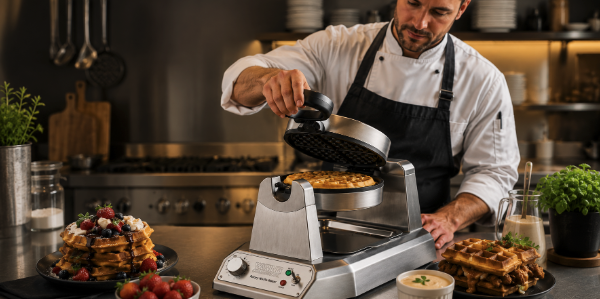
Grease build-up on your panini grill doesn’t just look bad – it damages heating elements and leads to uneven cooking. Residue left in blender jugs dulls the blades over time and can affect the flavour of your next batch. Waffle maker plates with worn or neglected coatings start sticking, which ruins presentation and increases food waste. The small details that make a big difference – like sauce bottle lids. When dispensing holes clog with dried product, it slows the team down, creates frustration and delivers an inconsistent experience for your guests. The solution is simple: Clean them regularly, and replace worn lids when they become a problem
The bottom line: clean equipment performs better, lasts longer, and protects the quality of every dish you serve.
How often should you be cleaning your equipment?
Ideally, after every use. At an absolute minimum, all high-use equipment such as – panini grills, blenders, waffle makers, fryers – should be cleaned daily with deeper cleans scheduled weekly. The key is consistency. When cleaning becomes part of your opening and closing routines, it stops becoming optional and becomes a standard your team follows automatically.
Your Equipment-by-Equipment Guide
The golden rule here: clean while the grill is still warm, not scorching hot. You want the residue loose enough to come off easily, but the plates cool enough to work with safely.
Most importantly: train every operator on this process. Even the best cleaning routine fails if it’s not followed.
Ice safety is one of the top priorities for health inspectors – and rightly so. A poorly maintained ice machine is a genuine food safety risk, not just an equipment issue.
That last point catches a lot of operators off guard. If your ice machine suddenly seems sluggish, check the filter before you call a technician.
Here’s something worth knowing: the number one cause of compressor failure in commercial refrigeration is a dirty condenser coil. It’s one of the most preventable – and most overlooked – maintenance tasks in any kitchen.
This takes minutes to do and can add years to the life of your fridge.
Hot oil and water don’t mix – so proceed carefully and always follow the right sequence.
Blenders are workhorses that get used dozens of times a day – and often cleaned in a rush. A few habits that make a real difference:
Your kitchen equipment represents one of your most significant capital investments. A proactive approach to care and maintenance doesn’t just prevent breakdowns – it protects your profit margins, reduces downtime, and ensures every dish that leaves your kitchen meets your standards.
Operators who treat equipment maintenance as seriously as they treat food quality are the ones who avoid the costly surprises – like the compressor that fails on a Friday night, the fryer that’s out of action for a week or the blender that needs replacement blades or jugs, months too soon.
Make maintenance part of your kitchen culture, building it into your daily routines. Train your team to take ownership of the equipment they use. It’s one of the simplest, yet overlooked ways to run a more efficient, more profitable restaurant.
Print this out and post it in your kitchen.
General – All Equipment
Grills & Panini Toasters
Fryers & Oil Equipment
Blenders & Immersion Blenders
General Maintenance
Safety – Non-Negotiables
Need cleaning tools or advice on maintaining your equipment? Browse these products here or reach out to enquire.